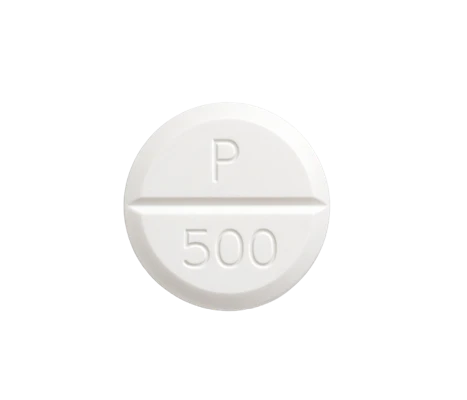
Tablets
Coated and uncoated tablets in round, oval and oblong shapes.
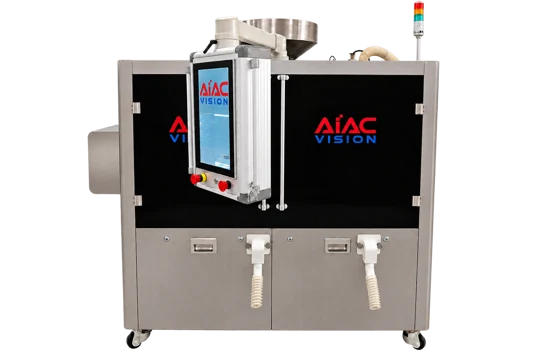
Inspect tablets, hard capsules and softgels on one platform. Three stations inspect both faces and the full sidewall. Add an optional fourth station for internal inspection of suitable softgels and liquid-filled capsules. For pharmaceutical and nutraceutical production, including dietary supplements.
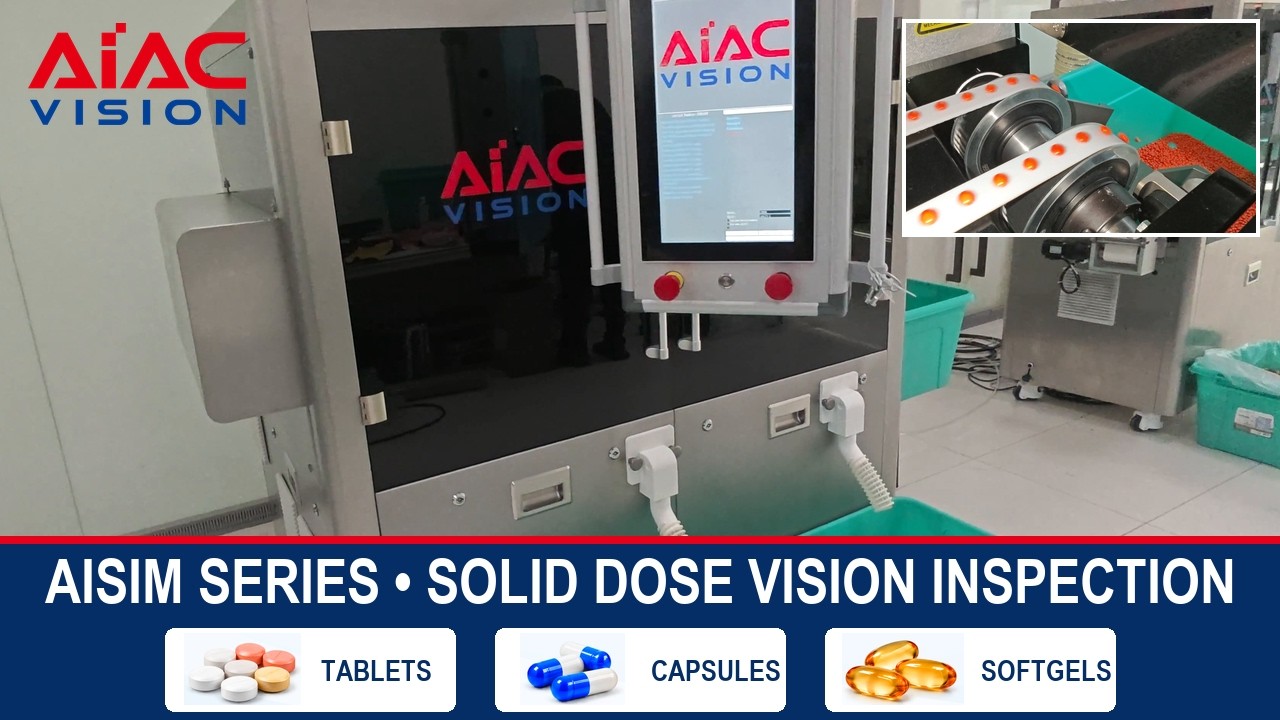
Explore the equipment, inspection process and configuration options with our team.
Dedicated product handling and inspection recipes support different solid dose products.
Coated and uncoated tablets in round, oval and oblong shapes.
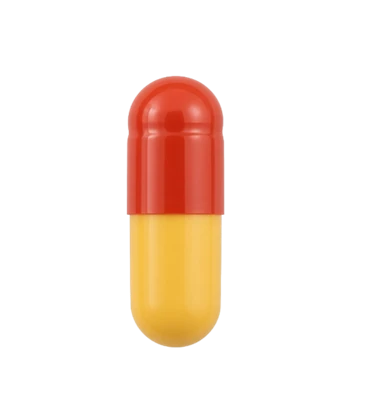
Multiple standard capsule sizes, with application-specific inspection settings.
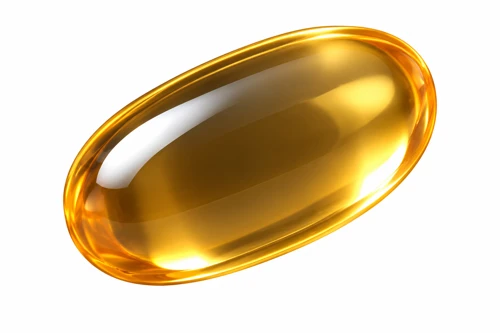
Surface inspection, with optional internal inspection for suitable transparent products.
Product compatibility and inspection performance are confirmed through sample testing.
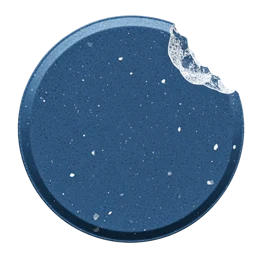
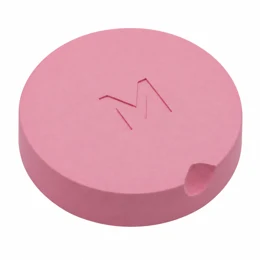
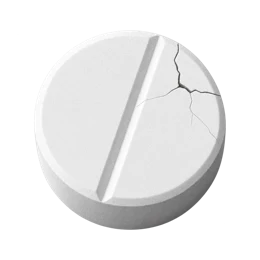
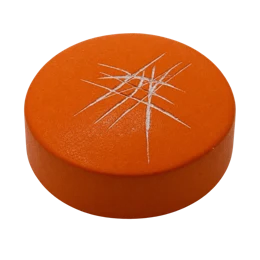
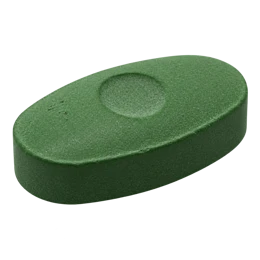
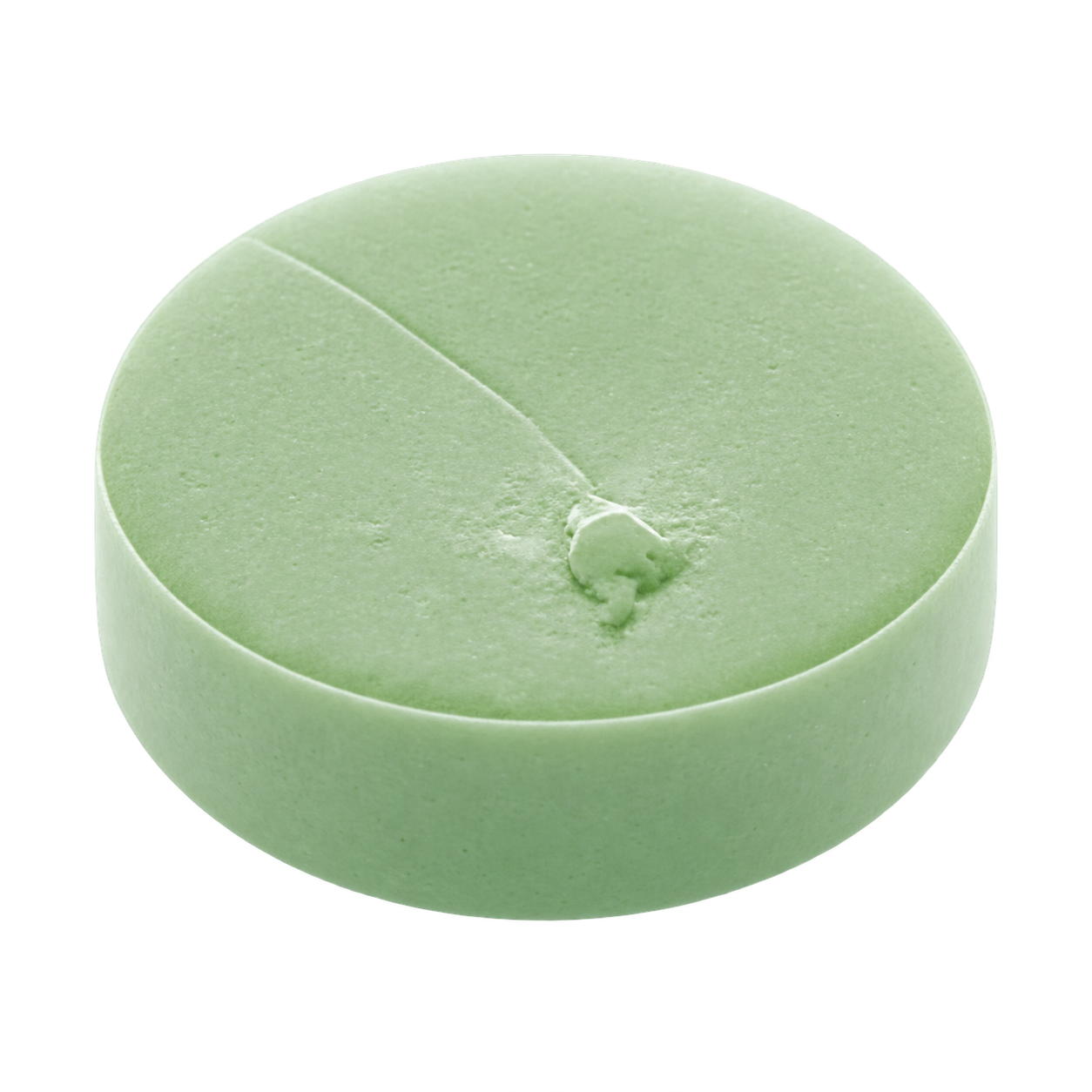
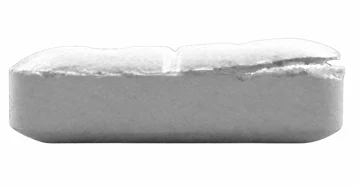
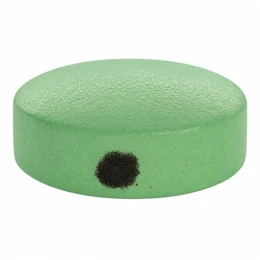
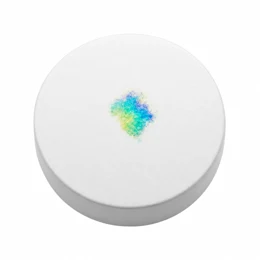
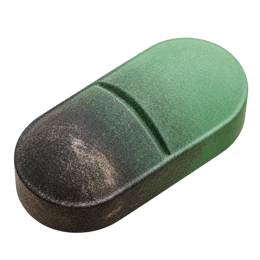
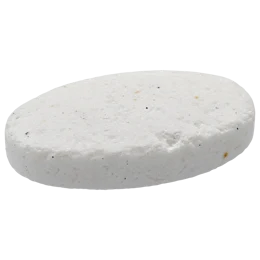
Inspection criteria and acceptance limits are defined for your product. Internal inspection requires the optional backlight station and suitable product transparency.
Three coordinated stations inspect both major faces and the surrounding side surfaces. An optional fourth station uses backlighting to reveal internal defects.
A vacuum drum holds and positions each product for a consistent view of its exposed face.
Controlled transfer from the drum to the conveyor belt exposes the opposite face for inspection.
Four complementary side views provide coverage of the edges and sidewalls, completing 360° surface inspection.
Transmitted light reveals bubbles, visible foreign material and fill abnormalities in suitable softgels and liquid-filled capsules.
Complementary methods for different products and defect characteristics.
Choose 2, 4, 6 or 8 channels to match your product and throughput requirements.
Product-specific change parts and recipes support changes in product type and size.
Compare AISIM-1500, AISIM-3000, AISIM-4500 and AISIM-6000 around your product dimensions, target throughput and inspection requirements.
| Inspection channels | 2 |
|---|---|
| Standard cameras | 6 |
| Cameras with optional backlight inspection | 8 cameras |
| Power | 5 kW |
| Power supply | 120/208 V AC, 60 Hz, 3-phase, 5-wire |
| Air pressure | 0.6 MPa |
| Air consumption | 6 gal/min |
| Dimensions, L × W × H | 66.5 × 46.3 × 72.7 in |
| Total weight | 3,086 lb |
Backlight inspection is optional. The higher camera count includes the additional backlight inspection stations.
Capacity varies with product dimensions and characteristics.
| Diameter (mm) | Capacity (units/hour) |
|---|---|
| ≤5 | Up to 115,000 |
| 5–7 | Up to 105,000 |
| 8–12 | Up to 97,000 |
| 12–16 | Up to 58,000 |
Capacity depends on product characteristics and is established through sample testing.
Plan feeding, inspection and downstream handling around your existing equipment.
Our team reviews the interfaces that determine how AISIM fits into your line.
Evaluate tablet appearance using product-specific images and defect criteria. AISIM inspects both faces and the sidewall; compatibility and performance depend on the tablet and selected configuration.
Evaluate suitable softgel surfaces with product-specific recipes. Optional internal inspection requires the additional station and suitable optical properties.
AISIM also supports hard capsules. Discuss shell appearance, filling, dimensions and relevant defects to select the appropriate inspection setup.
One inspection platform supports different solid dose product families. Representative good and defective samples help evaluate compatibility and recipe requirements.
Yes. AISIM supports suitable pharmaceutical and nutraceutical products, including tablets, softgels and hard capsules.
Review the tablet defect examples above. Detection criteria depend on product appearance, imaging and recipe.
Review the softgel examples and optical conditions. Optional internal inspection requires a suitable product and additional station.
Yes. Hard capsules are one of the three supported product families.
Set product-specific recipes and review changes using representative good and defective samples.
Share your product type, target defects and required capacity. We will help you evaluate the next step.